
How to Baby Proof a Fireplace
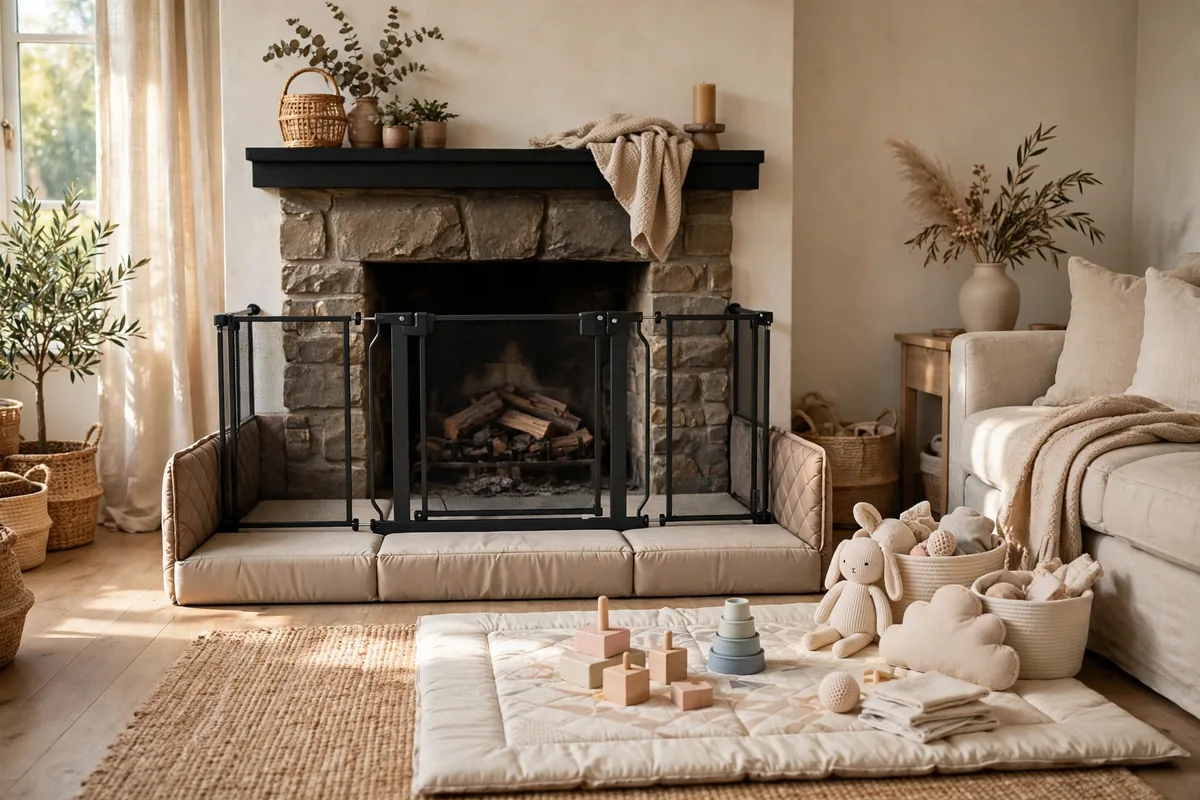
To baby proof a fireplace, install a sturdy, hardware-mounted safety gate or enclosure around it, add a protective screen, pad the hearth edges and corners, and keep tools, matches and lighters locked away. Gas fireplace glass can stay hot after the fire is off, so keep your baby away until it has fully cooled according to the manufacturer.
Why Is Baby Proofing a Fireplace Important?
Fireplaces contain several hazards that babies and toddlers may not recognize. A traditional wood-burning fireplace can have hot embers, flames, sharp tools, and rough brick or stone surfaces. Gas fireplaces may have glass fronts that become extremely hot during operation. Electric fireplaces can also have heating elements or accessible controls that attract curious children. Even if your fireplace is switched off, it may not be immediately safe to touch. Children’s skin is thinner than adult skin, so burns can happen quickly. A child who falls against a hard stone hearth may also experience cuts, bruises, or head injuries. Baby proofing helps reduce these risks by limiting access, cushioning dangerous edges, and making sure fireplace equipment stays out of reach.
How to Baby Proof a Fireplace Step by Step
You do not necessarily need to renovate your entire living room to make a fireplace safer. A combination of suitable safety equipment, proper installation, and consistent supervision can make a meaningful difference.
1. Install a Fireplace Safety Gate
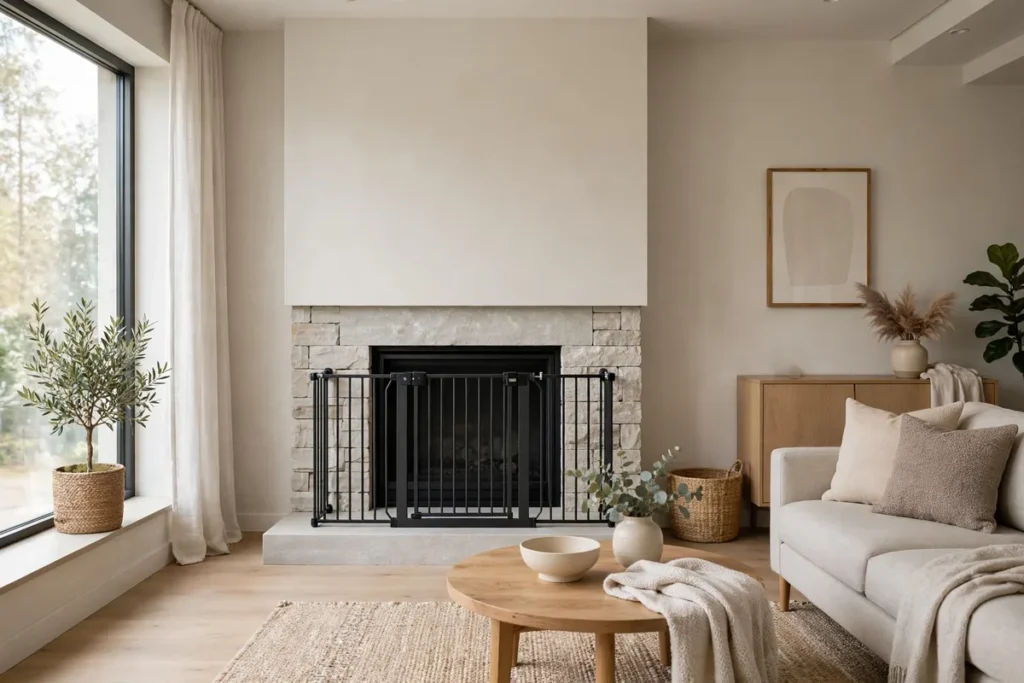
One of the most effective ways to baby proof a fireplace is to install a sturdy safety gate around it. A fireplace safety gate creates a physical barrier that prevents your baby from reaching the fireplace, touching hot surfaces, or playing with fireplace accessories. Look for a multi-panel gate or adjustable fireplace enclosure that can cover the full area around your fireplace. When choosing a gate, consider the following:
- Secure construction: Select a gate that remains stable when a child pushes or pulls against it.
- Suitable height: It should be tall enough to prevent your toddler from climbing over it.
- Appropriate spacing: The openings should not allow your child’s head or body to become trapped.
- Secure locking mechanism: Adults should be able to open it easily, while children should not be able to operate it.
- Suitable installation: Follow the manufacturer’s instructions and use the recommended mounting hardware.
For fireplaces and other high-risk areas, a hardware-mounted barrier is generally more secure than relying on a lightweight portable gate.
2. Cover Sharp Hearth Edges and Corners
Many fireplaces have raised hearths made from brick, stone, marble, or concrete. Although these materials are durable, their hard edges can cause injuries if a baby falls against them. This becomes particularly important when your child starts crawling, pulling up, or walking along furniture. Install soft corner guards or edge cushions along exposed hearth edges. Choose products designed to stay securely attached and suitable for the surface material. Before installing them:
- Clean the hearth surface to remove dust and dirt.
- Measure the exposed edges and corners.
- Select cushioning that covers the hard surfaces adequately.
- Follow the manufacturer’s installation instructions.
- Check regularly for loose sections or damaged adhesive.
Avoid using loose cushions, towels, or blankets as permanent protection. A child can pull these away, leaving the hard surface exposed. Remember that edge padding reduces impact injuries but does not make a fireplace safe to climb or play around.
3. Install a Fireplace Screen
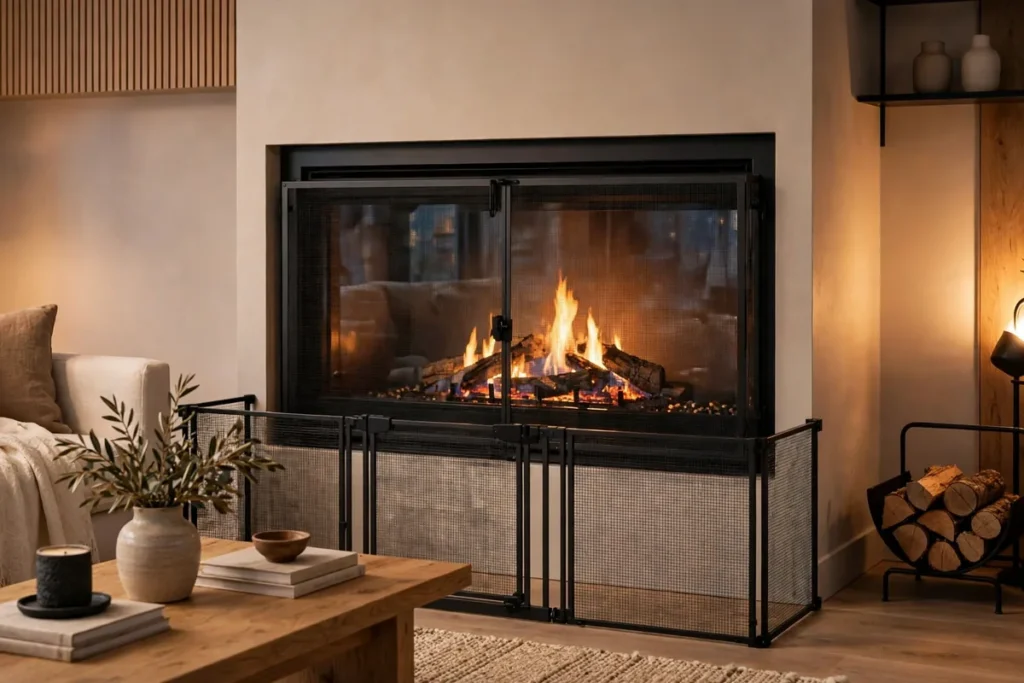
A fireplace screen provides another layer of protection, particularly for wood-burning fireplaces. It helps prevent children from reaching directly toward flames, hot embers, and burning materials. It can also help contain sparks that might otherwise escape into the room. Choose a sturdy screen that is designed for your particular fireplace. It should be properly positioned and stable enough that a toddler cannot easily pull it over. However, a fireplace screen is not a replacement for a child safety gate. Screens themselves can become hot, so your baby should not be allowed to touch them. Keep the surrounding area restricted even when the screen is in place.
4. Protect Your Baby From Hot Fireplace Glass
Gas fireplaces require particular attention because their glass fronts can reach extremely high temperatures. A fireplace may look safe because the flames are enclosed behind glass, but that does not mean the surface is safe to touch. Children can suffer serious contact burns after touching hot fireplace glass, sometimes even when the flames are no longer visible. To reduce this risk:
- Install a manufacturer-approved protective fireplace screen.
- Use a properly installed safety gate to prevent access.
- Follow the manufacturer’s instructions regarding glass temperatures and cooling times.
- Never assume that the glass is safe simply because the fireplace has been switched off.
5. Keep Fireplace Tools Out of Reach
Fireplace accessories can be dangerous for young children. Tools such as pokers, tongs, brushes, and shovels may have sharp edges or heavy metal handles. A toddler may also try to pull down the tool stand while exploring the room. Store these items behind a secured barrier or in a location your child cannot reach. Never leave fireplace tools leaning against the hearth. Put them away after every use, even if you plan to use the fireplace again later. Also keep firewood, decorative logs, and other heavy objects away from areas where your baby plays.
6. Store Matches and Lighters Safely
Matches, lighters, and fireplace ignition accessories should never be accessible to children. Store them in a locked drawer or cabinet, preferably in a location away from the fireplace. Do not leave a lighter on a mantelpiece or coffee table simply because it appears out of reach. Toddlers can climb onto furniture and pull objects toward themselves. If your fireplace uses remote controls or ignition switches, secure them according to the manufacturer’s instructions.
7. Keep Furniture Away From the Fireplace
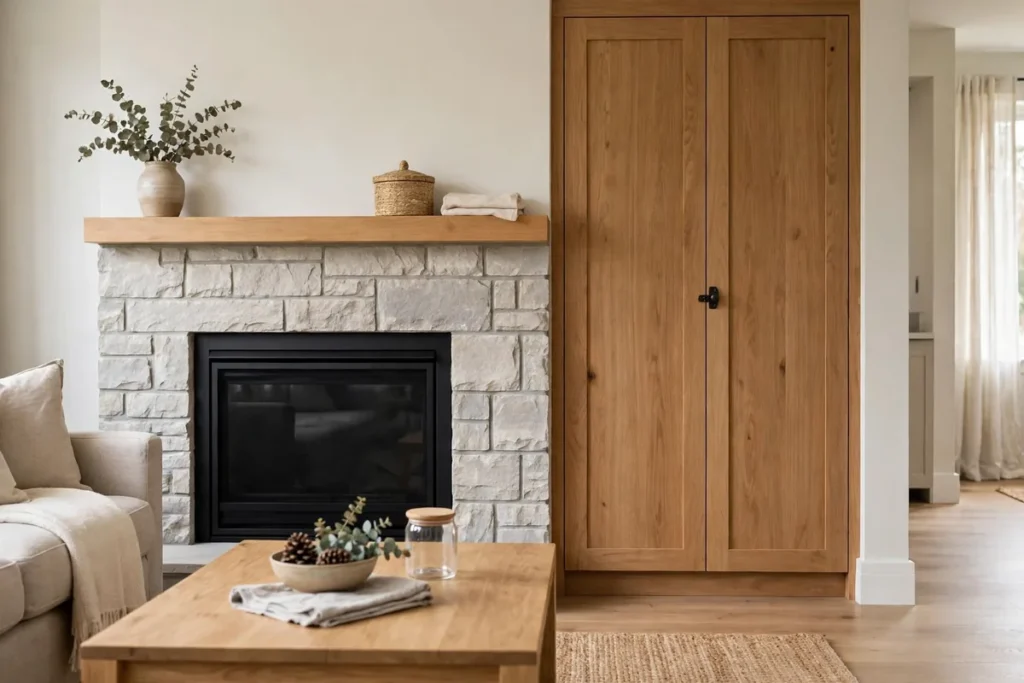
Furniture placement can influence how easily your baby approaches a fireplace. If a sofa, chair, table, or storage unit is positioned directly beside the fireplace, your child may use it to climb over a safety barrier or get closer to the hearth. Arrange the furniture to create additional space between the fireplace and your child’s usual play area. Also make sure that curtains, blankets, cushions, toys, and other combustible materials remain at a safe distance from the fireplace.
8. Create a Separate Play Area
Babies need room to crawl, explore, and play. However, their play area should not overlap with the space immediately surrounding a fireplace. Consider placing a playpen or baby-safe play area in another part of the room. Choose a location where your child can remain within your line of sight while staying away from hot surfaces and fireplace equipment. If your living room is small, use a secure room-dividing safety gate to keep your baby away from the fireplace area.
9. Secure Fireplace Doors and Controls
Some fireplaces have doors, handles, latches, or accessible controls that children may try to operate. Check whether your fireplace has doors that can be pulled open or controls that are easy for a toddler to reach. Use manufacturer-approved locks or protective covers where appropriate. Avoid modifying the fireplace’s ventilation, ignition, or safety mechanisms. Any protective equipment should be compatible with the appliance and installed according to its instructions.
10. Maintain Smoke and Carbon Monoxide Detectors
Baby proofing should also include protection against smoke and carbon monoxide. Install working smoke alarms on every level of your home and in the recommended locations near sleeping areas. Carbon monoxide alarms should also be installed according to local safety guidance. Test these devices regularly and follow the manufacturer’s recommendations for battery replacement and maintenance. If you have a wood-burning fireplace, arrange regular professional inspection and cleaning. For gas fireplaces, follow the manufacturer’s servicing recommendations.
How to Baby Proof Different Types of Fireplaces
Not every fireplace requires exactly the same safety setup.
Wood-Burning Fireplaces
Main concerns: Open flames, sparks, embers, hot screens, and fireplace tools. Use a sturdy fireplace screen along with a separate safety gate or enclosure. Keep firewood and tools secured, and make sure the fire is completely extinguished before leaving the home or going to bed. Never leave a burning fireplace unattended.
Gas Fireplaces
Main concerns: Extremely hot glass, ignition controls, and accessible surfaces. Install an appropriate protective screen designed for your gas fireplace. Add a secure safety gate around the entire fireplace area and keep children away until the appliance has cooled according to the manufacturer’s guidance.
Electric Fireplaces
Main concerns: Heating outlets, hot surfaces, electrical cords, and controls. Keep your baby away from the heating outlet and secure electrical cords to prevent pulling or chewing. Use an appropriate safety barrier if the appliance has accessible hot surfaces. Check the manufacturer’s instructions to determine which surfaces may become hot during operation.
How to Baby Proof a Fireplace Hearth Without a Gate
Some parents have fireplaces with unusual shapes or limited space, making a traditional gate difficult to install. In these situations, consider a custom-fit fireplace enclosure or a properly installed room-dividing safety gate that blocks access to the entire area. You can also install suitable edge cushioning to reduce injuries from accidental falls. However, soft padding alone is not enough to prevent burns or contact with fireplace glass. If a secure physical barrier cannot be installed around the fireplace, keeping your child out of the room while the fireplace is in use is a safer option.
Common Fireplace Baby Proofing Mistakes to Avoid
Even a well-designed safety setup can fail if important details are overlooked.
- Using a Regular Pet Gate: Pet gates are not necessarily designed or tested to protect children. Choose a suitable child safety gate.
- Relying Only on a Fireplace Screen: Screens can become hot and may not prevent children from reaching other parts of the fireplace.
- Leaving the Fireplace Unattended: Never assume that a barrier removes the need for supervision.
- Ignoring the Hearth Edges: A fireplace can cause fall injuries even when it is not being used.
- Forgetting About Hot Glass: Gas fireplace glass can remain dangerous after the flames have been turned off.
- Leaving Accessories Nearby: Fireplace tools, matches, and lighters should always be secured.
- Assuming a Switched-Off Fireplace Is Immediately Cool: Always follow the manufacturer’s cooling guidance.
Frequently Asked Questions
1. What is the best way to baby proof a fireplace?
A sturdy, properly installed fireplace safety gate or enclosure is one of the most effective options. Combine it with a fireplace screen, padded hearth edges, and secure storage for tools and ignition accessories.
2. Are fireplace screens safe around babies?
Fireplace screens provide protection from flames, sparks, and embers, but they can become hot themselves. Keep babies away from the screen using an additional safety barrier.
3. Can babies touch fireplace glass when it is turned off?
No. Fireplace glass can remain hot after the appliance has been switched off. Follow the manufacturer’s cooling instructions before allowing access to the area.
4. Do I need a special baby gate for a fireplace?
A sturdy fireplace enclosure or multi-panel safety gate is generally preferable. It should be suitable for the fireplace layout, securely installed, and designed to prevent children from reaching the hazardous area.
5. How do I protect my baby from a brick fireplace hearth?
Install appropriate corner guards and edge cushions along exposed surfaces. Also use a secure barrier to prevent your child from climbing onto or playing around the hearth.
6. Should I keep my baby away from an electric fireplace?
Yes. Electric fireplaces may have hot surfaces, accessible heating outlets, and electrical cords. Follow the manufacturer’s safety instructions and use a suitable barrier when necessary.