How to Cook Ribeye Steak
To cook a ribeye steak, pat it dry, season it with salt and pepper, and sear it in a very hot skillet for 2–3 minutes per side. Add butter, garlic and herbs, baste for about a minute, then cook to your preferred internal temperature using a meat thermometer. Rest the steak for at least 3 minutes before slicing.
What Makes Ribeye Steak Special?
Ribeye comes from the rib section of the cow and is valued for its fat marbling. Marbling refers to the small streaks of fat distributed throughout the muscle. As the steak cooks, some of this fat melts and contributes to its rich flavor and juicy texture. Ribeye is generally more forgiving than very lean cuts because its fat content helps maintain a satisfying eating experience. There are two common varieties:
- Boneless ribeye: Easier to handle in a skillet and convenient for slicing and serving.
- Bone-in ribeye: Contains the rib bone, which can make the steak thicker and slightly more challenging to cook evenly.
Both can produce excellent results when cooked carefully.
Ingredients Needed to Cook Ribeye Steak
For a simple pan-seared ribeye, gather the following ingredients:
- 1 ribeye steak, approximately 1 to 1½ inches thick
- 1 tablespoon high-smoke-point cooking oil
- 1 teaspoon kosher salt, adjusted to taste
- ½ teaspoon freshly ground black pepper
- 1 tablespoon unsalted butter
- 2 garlic cloves, lightly crushed
- 1 or 2 sprigs of fresh rosemary or thyme
You do not need every ingredient to make a good steak. Salt, pepper, and cooking oil are enough for a basic version. Butter, garlic, and herbs add extra flavor during the final cooking stage.
How to Choose the Right Ribeye Steak
Choosing a good steak is the first step toward getting a satisfying result. Look for a ribeye with visible, evenly distributed white fat throughout the meat. A well-marbled steak generally offers more flavor than one with very little internal fat. Consider these points when shopping:
- Thickness: A steak around 1 to 1½ inches thick is a practical choice for pan-searing. Thicker steaks provide more room to develop a browned exterior without overcooking the center.
- Color: Look for beef that has a fresh appearance and is not excessively discolored.
- Fat Distribution: Choose a steak with fine streaks of fat throughout the meat rather than only a large outer strip.
- Freshness: Check the packaging date, storage conditions, and use-by information.
If you are buying frozen ribeye, thaw it safely in the refrigerator rather than leaving raw meat on the kitchen counter for several hours.
How to Cook Ribeye Steak in a Pan
Pan-searing is one of the easiest ways to cook ribeye at home. A heavy cast-iron or stainless-steel skillet works particularly well because it can retain the heat needed to brown the meat.
Step 1: Prepare the Steak
Remove the ribeye from its packaging and pat both sides dry using paper towels. This is an important step because excess surface moisture can interfere with browning. A dry surface allows the steak to make better contact with the hot pan. If you have time, season the steak with salt and leave it uncovered on a rack in the refrigerator for several hours or overnight. This can help dry the surface and improve browning. Otherwise, season it immediately before cooking.
Step 2: Season With Salt and Pepper
Sprinkle salt and freshly ground black pepper evenly over both sides of the steak. Make sure the edges receive some seasoning as well. You do not need a complicated marinade because ribeye already has plenty of natural flavor. A simple seasoning combination allows the beef to remain the main focus.
Step 3: Heat Your Skillet
Place a heavy skillet over medium-high to high heat, depending on your stove and pan. Allow it to heat properly before adding the steak. Pour in a small amount of high-smoke-point oil and spread it across the cooking surface. The oil should shimmer, but it should not be allowed to burn or produce excessive smoke. Keep your kitchen ventilated while cooking.
Step 4: Place the Ribeye in the Pan
Carefully place the steak in the hot skillet, laying it away from you to reduce the risk of splashing hot oil. You should hear an immediate sizzling sound. Avoid moving the steak repeatedly. Allow the first side to develop a deep brown crust before turning it. For a steak approximately 1 inch thick, the initial searing stage may take around 2 to 3 minutes, depending on the pan and heat.
Step 5: Flip and Cook the Other Side
Use tongs to turn the ribeye over. Allow the second side to brown. The exact cooking time will depend on the thickness and your desired doneness. If the steak is particularly thick, you may need to reduce the heat slightly after developing the crust so the center can cook without burning the outside. You can also turn the steak onto its fat edge briefly to render some of the outer fat.
Step 6: Add Butter, Garlic, and Herbs
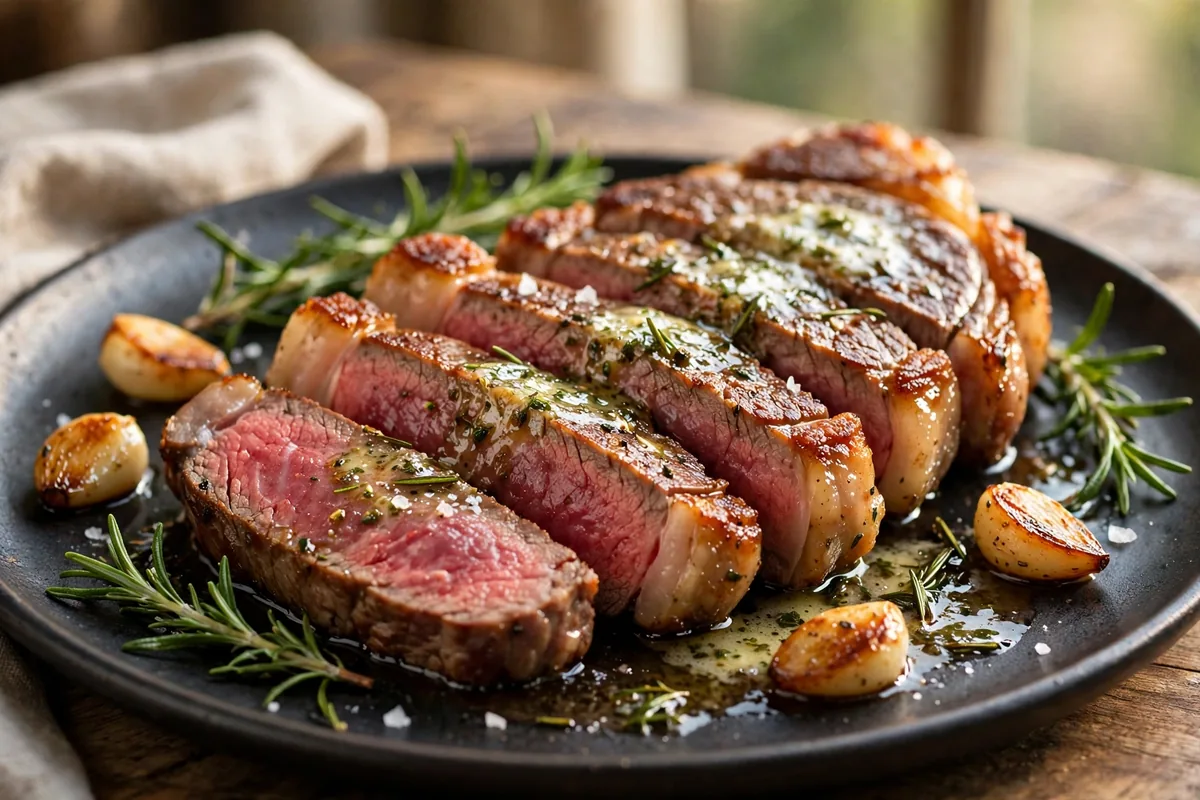
Once both sides have developed a good crust, reduce the heat slightly. Add the butter, crushed garlic, and fresh rosemary or thyme to the skillet. As the butter melts, tilt the pan carefully and use a spoon to repeatedly pour the melted butter over the steak. This technique is called butter basting. It adds richness and helps distribute the aroma of the garlic and herbs across the meat. Avoid allowing the butter or garlic to burn. Adjust the heat if they begin browning too quickly.

Step 7: Check the Internal Temperature
A meat thermometer is the most reliable way to determine whether your steak has reached the desired internal temperature. Insert the thermometer into the thickest part of the steak, avoiding the bone and large pockets of fat. For food safety, the USDA recommends cooking whole beef steaks to a minimum internal temperature of 145°F (63°C), followed by at least a three-minute rest. Personal doneness preferences may differ, but lower temperatures such as those used for rare or medium-rare steak are below the USDA’s recommended minimum.
Step 8: Rest Before Slicing
Transfer the cooked ribeye to a clean cutting board or plate. Allow it to rest for at least three minutes to meet the USDA’s minimum resting recommendation. Many cooks prefer resting a thicker steak for approximately 5 to 10 minutes. Resting allows the temperature to stabilize and makes the steak easier to slice and serve.
How to Cook Ribeye Steak in the Oven
Using the oven is a useful option when cooking a thick ribeye that might burn on the outside before the center reaches the desired temperature. A popular approach is to sear the steak first and finish it in the oven.
Step 1: Preheat the Oven
Preheat your oven to approximately 375°F (190°C). Prepare an oven-safe skillet, preferably cast iron, so you can transfer the steak without changing pans.
Step 2: Season the Steak
Pat the ribeye dry and season both sides with salt and pepper. For thicker steaks, make sure the edges are seasoned as well.
Step 3: Sear the Steak
Heat your skillet on the stovetop with a small amount of cooking oil. Sear the steak for approximately 2 minutes per side, adjusting the time based on its thickness and the heat of your pan. The goal is to develop a browned exterior, not to cook the entire steak during this stage.
Step 4: Finish Cooking in the Oven
Transfer the oven-safe skillet into the preheated oven. Allow the steak to continue cooking until it reaches the appropriate internal temperature. Cooking time varies considerably depending on thickness, starting temperature, and oven performance. Begin checking the temperature early rather than relying entirely on a timer.
Step 5: Rest and Serve
Remove the skillet carefully using oven mitts. Transfer the steak to a clean plate or cutting board and allow it to rest before slicing. The result should have a flavorful browned exterior and a more evenly cooked center.
Remove the steak slightly before it reaches your target temperature, because the temperature will continue to rise during resting.
How to Grill Ribeye Steak
Grilling is another excellent way to prepare ribeye, especially during outdoor gatherings. Start by cleaning and preheating your grill. If you have a two-zone setup, create one hotter area for searing and another cooler area for more controlled cooking. Pat the steak dry and season it with salt and pepper. Place the ribeye over the hotter part of the grill and allow it to brown. Turn it using tongs and cook the opposite side. If the steak is thick, move it to the cooler side to continue cooking without excessive charring. Use a meat thermometer to check the center and follow the recommended food-safety temperature. Once cooked, transfer the ribeye to a clean plate and allow it to rest before serving. Avoid pressing down on the steak with a spatula because this does not improve the crust and can squeeze out flavorful juices.

Ribeye Steak Temperature and Doneness Guide
The internal temperature determines how cooked the center of your steak will be. Here is a general guide to common culinary doneness preferences. These lower-temperature preferences are not equivalent to the USDA’s recommended minimum food-safety temperature.
| Doneness | Approximate internal temperature |
|---|---|
| Rare | 120–125°F |
| Medium rare | 130–135°F |
| Medium | 140–145°F |
| Medium well | 150–155°F |
| Well done | 160°F and above |
For food safety, use a thermometer and follow the USDA recommendation of 145°F with a three-minute rest. Do not rely on color alone to determine whether beef is safely cooked.

How Long Does It Take to Cook Ribeye Steak?
There is no single cooking time that works for every ribeye. The thickness of the steak, pan temperature, cooking method, and starting temperature all affect how quickly it cooks. For example, a thin steak may cook relatively quickly in a skillet, while a 2-inch ribeye may need a combination of stovetop searing and oven cooking. The following estimates are general planning guidelines rather than guaranteed cooking times:
| Steak thickness | Approximate pan-cooking time |
|---|---|
| ¾ inch | 8–11 minutes |
| 1 inch | 12–15 minutes |
| 1½ inches | Varies; may need an oven finish |
| 2 inches | Often better suited to reverse searing |
The times can vary significantly. Always use internal temperature rather than appearance or timing alone to determine when the steak is done.
What to Serve With Ribeye Steak
Ribeye has a rich flavor, so it pairs well with sides that balance its buttery texture. Here are some popular options:
- Roasted Potatoes: Crispy potatoes provide a satisfying contrast to the tender steak.
- Mashed Potatoes: Creamy mashed potatoes complement the richness of the beef.
- Grilled Vegetables: Asparagus, zucchini, bell peppers, and mushrooms add freshness and variety.
- Garlic Green Beans: Their slightly crisp texture works well alongside a seared ribeye.
- Fresh Salad: A simple salad with leafy greens and a light dressing helps balance a heavier meal.
- Sauteed Mushrooms: Mushrooms cooked with garlic and herbs make a flavorful accompaniment.
You can also serve the steak with a small amount of herb butter or a simple pan sauce.
Common Mistakes to Avoid When Cooking Ribeye
Even a high-quality ribeye can turn out disappointing if a few basic cooking principles are ignored.
- Cooking a Wet Steak: Moisture on the surface makes browning more difficult. Always pat the steak dry before searing.
- Using a Cold Pan: A properly heated skillet is important for developing a browned crust.
- Moving the Steak Too Frequently: Constantly shifting the meat can interfere with consistent browning.
- Using Too Much Butter Too Early: Butter can burn at high temperatures. Add it toward the end of cooking.
- Skipping the Thermometer: Cooking time alone cannot reliably determine doneness.
- Cutting Immediately: Allowing the steak to rest gives it time to stabilize before serving.
- Overcooking the Meat: Pay attention to internal temperature instead of leaving the steak in the pan for an arbitrary amount of time.
Frequently Asked Questions
1. What is the best way to cook ribeye steak?
Pan-searing in a heavy skillet is one of the best methods for achieving a flavorful crust. Adding butter, garlic, and herbs toward the end creates additional richness.
2. Should I cook ribeye steak in butter or oil?
Use oil first because it can handle the high heat needed for searing. Add butter near the end of cooking for flavor and basting.
3. How long should ribeye steak rest after cooking?
Allow at least three minutes of resting to meet USDA food-safety guidance. Thicker steaks are often rested for approximately 5 to 10 minutes.
4. Do I need to marinate ribeye steak?
No. Ribeye already has natural marbling and plenty of flavor. Salt and pepper are usually enough, although you can use a marinade if you prefer.
5. How do I know when ribeye steak is done?
Use an instant-read meat thermometer inserted into the thickest part of the steak. Temperature is more reliable than judging doneness by color or firmness.
6. Can I cook ribeye steak without a cast-iron skillet?
Yes. A heavy stainless-steel skillet or another suitable frying pan can also produce excellent results. The important thing is to use cookware that can retain sufficient heat for proper searing.