
How to Teach Kids to Swim: A Step-by-Step Guide for Parents
Learning how to swim is an important life skill that helps children become more confident and safer around water. The best way to teach kids to swim is to start with water confidence, introduce simple breathing and floating exercises, and gradually practice kicking and basic arm movements. Children should learn at their own pace, with constant adult supervision and guidance from a qualified swimming instructor whenever possible. Whether your child is a toddler or an older beginner, a patient and positive approach can make learning more enjoyable. The goal is not simply to teach a child to move through the water but to help them understand water safety and develop essential swimming skills.
1. Choose the Right Age to Start Swimming Lessons
Children develop at different speeds, so there is no single perfect age for every child to begin swimming lessons. Their physical development, emotional maturity, comfort around water, and ability to follow instructions all matter. According to the American Academy of Pediatrics, many children can begin swimming lessons around age one, depending on their readiness. Parent-child classes can introduce younger children to water, while many children are ready for more structured lessons by age four. Here is a general guide:
- Under 1 year: Focus on safe, supervised water experiences with a caregiver. Infant swimming programs have not been shown to prevent drowning.
- Ages 1–3: Parent-child classes can introduce water confidence, splashing, and supported floating.
- Ages 4–5: Many children are ready to practice basic water skills, including floating, kicking, and moving toward an exit.
- Ages 6 and older: Children can often follow more structured lessons and gradually develop coordinated swimming strokes.
These are general age ranges, not strict milestones. If your child has health or developmental concerns, ask their pediatrician about suitable lessons.
2. Make Your Child Comfortable in the Water
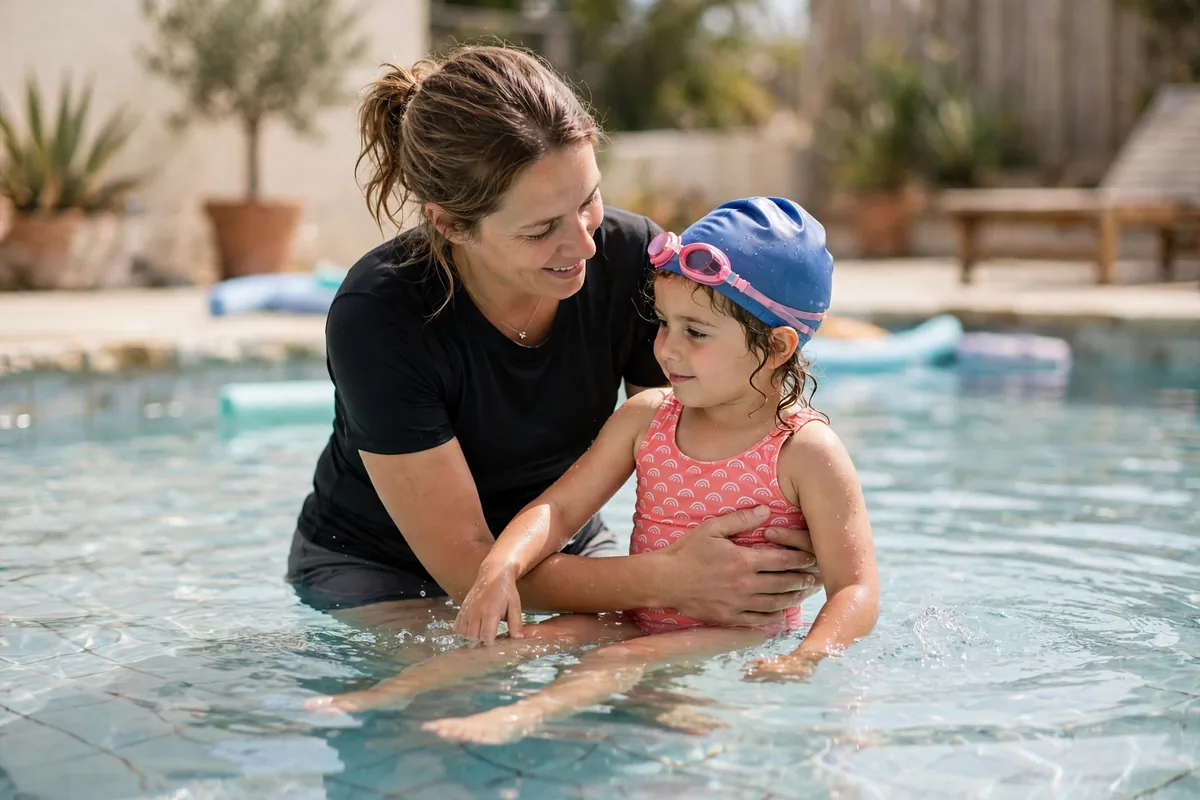
Before teaching swimming techniques, help your child feel relaxed in the water. A child who is frightened or uncomfortable may struggle to follow instructions, even when the exercises are simple. Begin in a shallow, designated swimming area where your child can stand securely. Stay close and let them explore the water gradually. Try these beginner activities:
- Let your child splash water gently with their hands.
- Encourage them to wet their arms and shoulders.
- Show them how to move their hands through the water.
- Play simple games with floating toys.
- Let them hold the pool wall while becoming familiar with the water.
Keep the first sessions short and enjoyable. Praise small achievements instead of expecting immediate progress. Never push, throw, or surprise a child into the water. Avoid forcing them to put their face underwater. Building trust is more important than rushing through the first lesson.
3. Teach Your Child How to Blow Bubbles
Breathing is one of the basic skills children need to learn before swimming independently. Beginners often feel uncomfortable when water reaches their face, so start with a simple bubble-blowing exercise. Show your child how to breathe in while their mouth is above the water and gently blow air out toward the water’s surface. You can practice this skill in a few ways:
- Ask your child to take a comfortable breath.
- Encourage them to lower their mouth toward the water.
- Show them how to blow gently and make bubbles.
- Let them repeat the exercise without rushing.
- Gradually practice with their nose closer to the water if they feel comfortable.
A simple game can make this activity more interesting. Ask your child to make small bubbles like a fish. Never force a child to submerge their face or hold their breath underwater. A qualified instructor can help them learn safe breathing techniques as their confidence improves.
4. Introduce Supported Floating
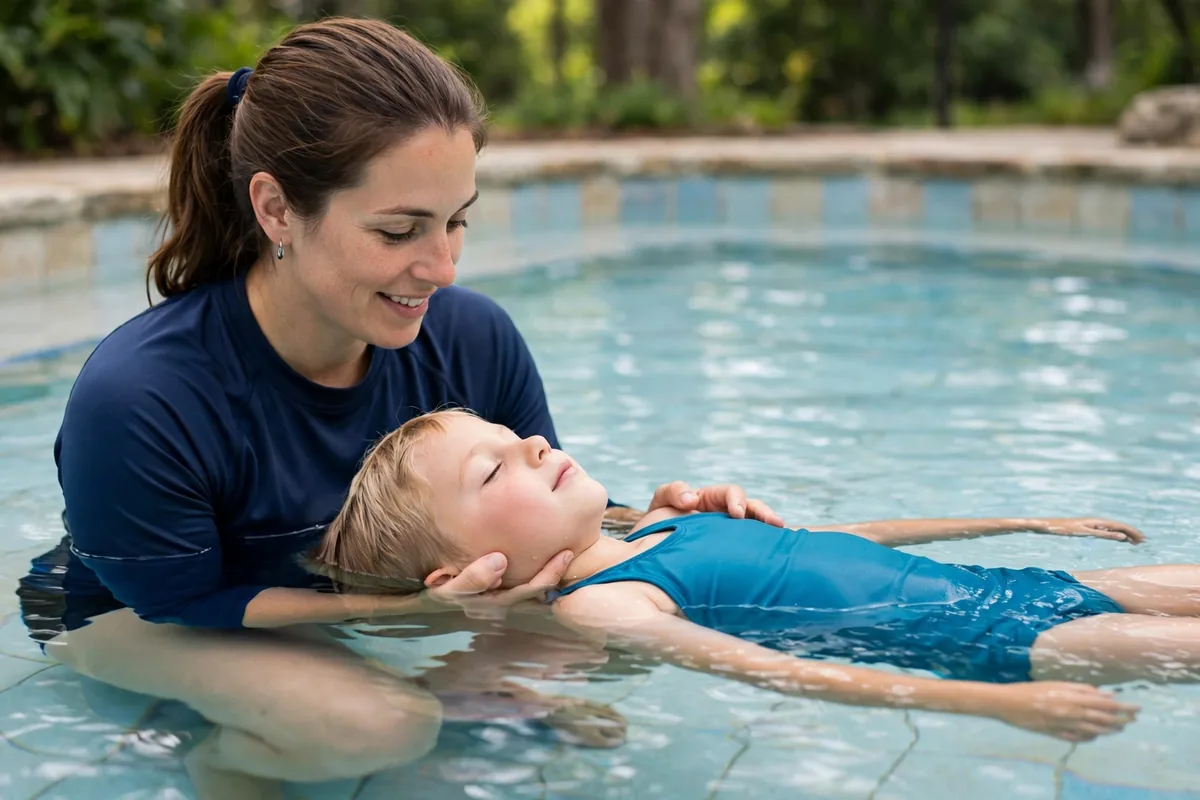
Floating helps children understand how their bodies behave in water. It is also an important foundation for developing basic water-survival skills. Start with supported floating rather than asking your child to float independently. For a back float, an instructor or trained adult can support the child’s head and upper back while helping them become comfortable with the position. Encourage the child to relax, look upward, and keep their body supported. A few useful tips include:
- Begin in a shallow pool with the child close to the instructor.
- Explain what will happen before changing their position.
- Support the child throughout the exercise.
- Encourage relaxed breathing.
- Stop if the child becomes uncomfortable or frightened.
As the child gains confidence, a qualified instructor can gradually reduce the support and assess whether they are ready for independent floating. Do not assume that a child who can float briefly is safe to swim alone. Floating is only one part of learning water competency.
5. Practice Kicking With Proper Support
Once your child feels more comfortable in the water, introduce basic kicking exercises. Kicking helps children develop movement and coordination. Start with the child holding the pool wall or receiving support from an instructor. Show them how to make small, steady kicks with their legs. Teach these basic points:
- Keep the legs relatively straight but relaxed.
- Make small movements from the hips.
- Avoid bending the knees too much.
- Keep the toes relaxed and pointed naturally.
- Practice a steady rhythm instead of kicking too hard.
You can also introduce a properly supervised kickboard exercise when the child is ready. A kickboard is a teaching aid, not a safety device, and it should never replace adult supervision. Do not rush the exercise. Children need time to understand how their legs move through the water.
6. Introduce Basic Arm Movements
After your child has practiced supported floating and kicking, an instructor can introduce simple arm movements. For beginners, the first goal is to understand how the arms move through the water. Children do not need to learn a complete swimming stroke immediately. You can begin with simple demonstrations outside the water:
- Show your child how to extend their arms forward.
- Demonstrate a gentle pulling movement through the water.
- Explain how the arms and legs work together.
- Practice the movements with appropriate support.
- Allow the instructor to correct the child’s position.
Keep the instructions short and demonstrate each movement slowly. Young children often learn better by watching and copying than by listening to long explanations.
7. Teach Your Child to Move Short Distances
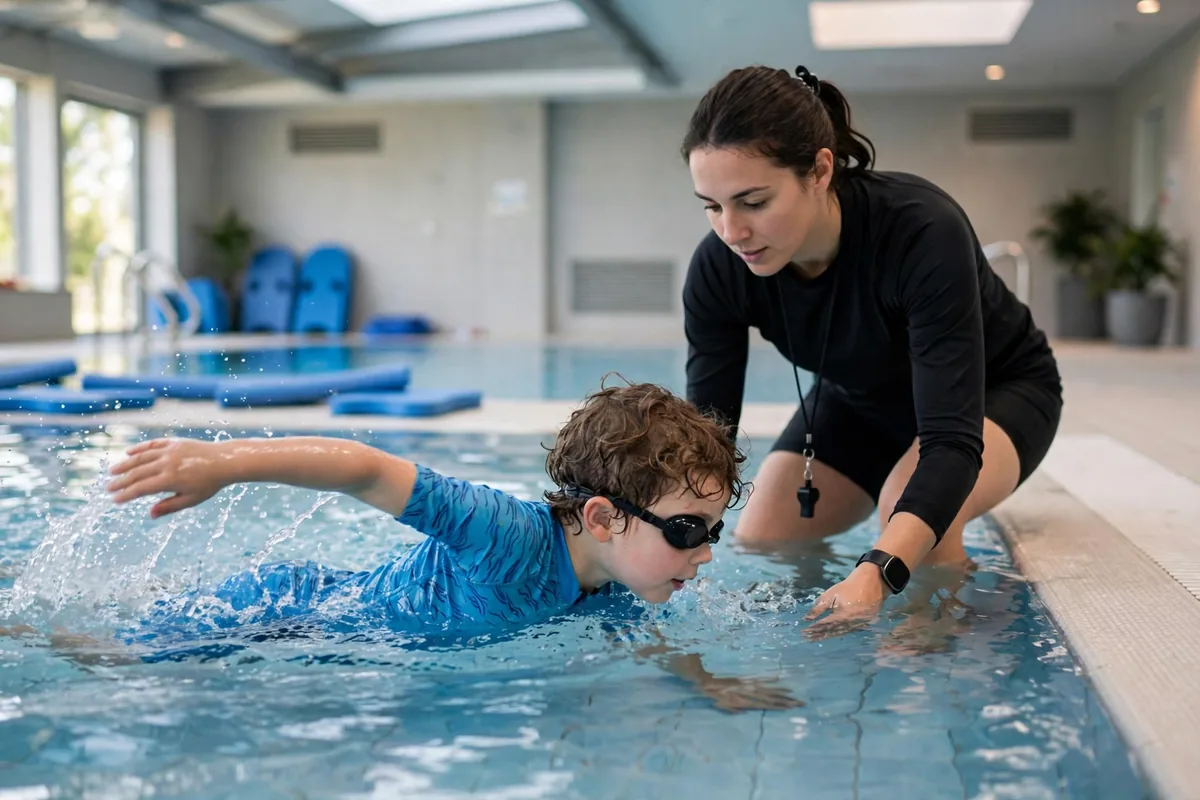
Once your child can practice basic movements with support, they can gradually work toward moving short distances in the water. A qualified instructor should decide when the child is ready to attempt this step. Begin with a controlled exercise in a suitable teaching area, with the instructor close enough to provide immediate support. Focus on:
- Maintaining a comfortable body position.
- Coordinating arm and leg movements.
- Keeping breathing controlled.
- Moving toward a nearby safe exit.
- Stopping and asking for help when needed.
Do not ask a beginner to swim across a pool or race against other children. Increase the distance only when the child demonstrates consistent control and the instructor considers it appropriate.
8. Teach Essential Water Safety Skills
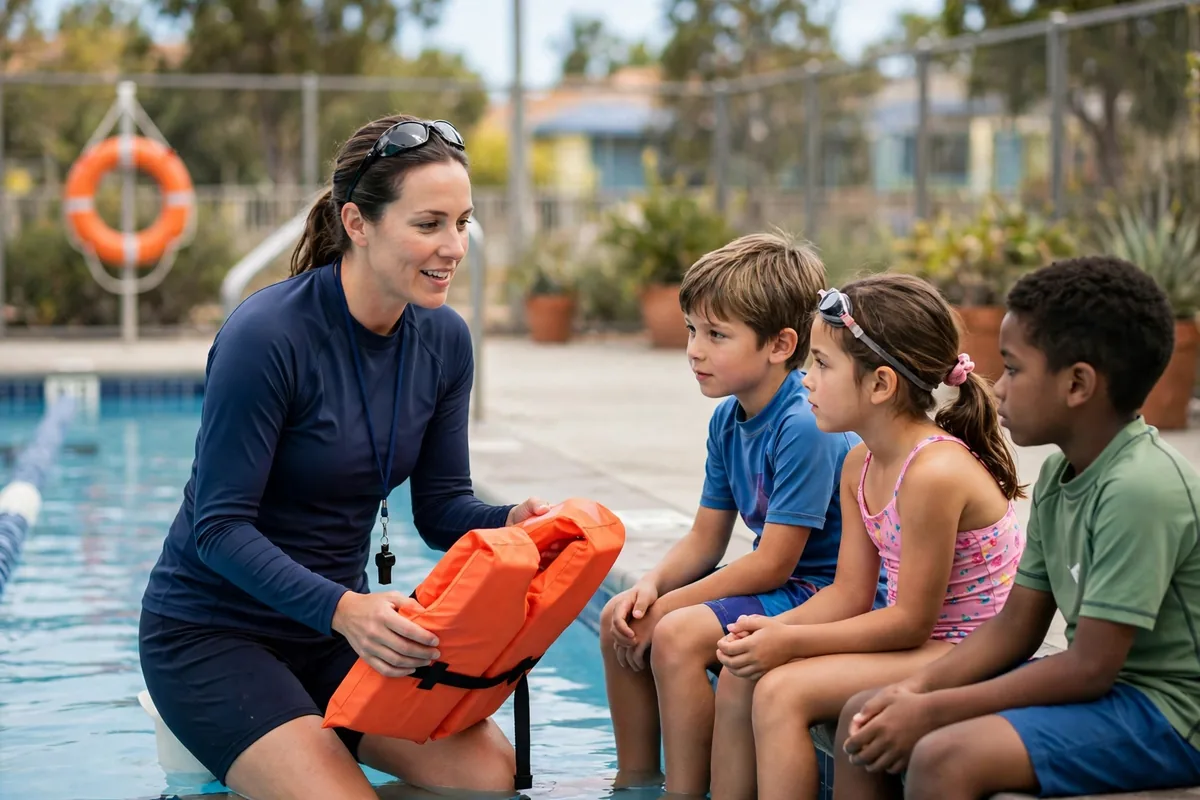
Swimming lessons should include more than learning how to move through the water. Children also need to understand what to do around pools and other bodies of water. Teach these important rules from the beginning:
- Never enter a pool without an adult’s permission.
- Never swim alone, even after learning basic strokes.
- Stay away from pool drains and restricted areas.
- Use a properly fitted life jacket during boating and activities in natural water.
- Follow lifeguard instructions at public swimming areas.
- Never run around the pool because wet surfaces can be slippery.
- Tell an adult immediately if someone appears to be struggling in the water.
Children should also learn basic water-survival skills, such as returning to the surface, floating or treading water, turning toward a safe exit, and getting out of the pool. These skills take repeated practice and should be taught in a controlled environment. Skills learned in a swimming pool do not automatically prepare a child for waves, currents, cold water, or other natural-water hazards.
9. Keep Swimming Practice Fun and Consistent
Children are more likely to enjoy swimming when lessons feel encouraging rather than stressful. A little variety can make practice more interesting while helping them repeat important skills. Try activities such as:
- Floating toy games: Encourage children to reach for a floating toy while remaining supported.
- Bubble games: Practice gentle exhaling into the water.
- Wall kicking: Let children practice steady kicks while holding the pool wall.
- Follow-the-instructor: Ask children to copy simple movements demonstrated by their teacher.
- Water confidence games: Use age-appropriate activities to help children become more comfortable in the pool.
Keep sessions appropriate for the child’s age, energy, and attention span. Take breaks when needed, and celebrate progress without comparing one child with another. Regular lessons are usually more useful than occasional long practice sessions. Children develop skills at different rates, so allow enough time for repetition and gradual improvement.
10. Know When to Get Professional Swimming Lessons
Parents can help children become comfortable around water, but professional instruction is valuable for learning correct techniques and water-survival skills. Look for an instructor who:
- Has recognised swimming-teaching qualifications.
- Has experience working with children of your child’s age.
- Teaches water safety alongside swimming techniques.
- Uses age-appropriate exercises.
- Provides individual feedback and tracks progress.
- Works in a properly supervised swimming facility.
A good program should progress gradually and avoid moving children to advanced skills before they are ready. Ask the instructor what your child has learned and which skills still need practice. If your child has a strong fear of water, a small class or individual lessons may be more suitable than a crowded group session.
Important Swimming Safety Tips for Parents
Even children who have completed swimming lessons need close supervision whenever they are in or near water. Learning to swim does not make a child drowning-proof. Follow these precautions:
- Always provide active supervision: An adult should stay close, attentive, and focused on the child. For young or inexperienced swimmers, remain within arm’s reach. Do not rely on a lifeguard as a replacement for your own supervision.
- Choose a safe swimming location: Use a properly maintained pool with clear water, safe entry and exit points, and appropriate supervision. Avoid teaching beginners in rivers, lakes, the sea, or other natural water environments.
- Use proper safety equipment: Children should wear correctly fitted, approved life jackets for boating and relevant natural-water activities. Inflatable toys and water wings are not substitutes for safety equipment or supervision.
- Secure pools when they are not in use: Home pools should have a four-sided isolation fence with a self-closing and self-latching gate. Keep children away from the pool when swimming is not supervised.
- Learn CPR: Parents and caregivers should consider recognised CPR and first-aid training so they know how to respond to a water emergency.
- Never force a child to swim: Fear, discomfort, and fatigue can affect a child’s ability to learn. Stop the activity if the child becomes distressed and return to easier exercises when appropriate.
Final Thoughts
Teaching kids to swim takes patience, consistency, and a strong focus on safety. Start by helping your child feel comfortable in the water, then gradually introduce breathing, supported floating, kicking, and basic arm movements. Professional lessons can help children develop these skills correctly and build confidence over time. Most importantly, remember that swimming lessons are only one layer of drowning prevention. Children still need attentive adult supervision, appropriate safety equipment, and clear rules whenever they are near water.
Frequently Asked Questions
1. What is the best age to teach a child to swim?
Many children can begin age-appropriate swimming lessons around their first birthday, depending on their development and readiness. Most are ready for more structured lessons by around age four.
2. How long does it take a child to learn to swim?
It varies from child to child. Some learn basic skills relatively quickly, while others need months of regular lessons and practice.
3. Can parents teach their children to swim at home?
Parents can introduce water confidence and reinforce skills, but formal lessons with a qualified instructor are recommended for learning proper swimming and water-survival techniques.
4. How do I help a child who is afraid of water?
Start slowly with simple activities in shallow water, offer encouragement, and avoid forcing the child underwater. A patient instructor may also help.
5. Should children use floaties when learning to swim?
Inflatable floaties and water wings should not be treated as safety devices. Use appropriate teaching equipment only under supervision and follow the instructor’s guidance.
6. Can a child who knows how to swim go into a pool alone?
No. Children should never swim alone, regardless of their swimming ability. An attentive adult must supervise them whenever they are in or near water.