How to Write Wedding Vows That Actually Mean (With Samples)
Most people stare at a blank page for weeks trying to write the perfect wedding vows. The pressure to say something beautiful, memorable, and not embarrassing in front of everyone you know is real. Here is the truth: the best wedding vows are not poetic. They are personal. To write wedding vows, think about your relationship, pick one meaningful memory, write three to five genuine promises, and keep it between 150 and 250 words. That is it. No Shakespeare required. This guide walks you through every step, with a template, real examples, and tips to help you deliver them without falling apart.
What Are Wedding Vows?
Wedding vows are personal promises that two people make to each other during their marriage ceremony. They express love, commitment, and the intention to build a life together. Some couples choose traditional vows, while others write their own. Personal vows can include memories, qualities you admire about your partner, promises for married life, and hopes for the future. The goal is not to impress your guests with beautiful words. It is to communicate something meaningful to the person standing in front of you.
How to Write Wedding Vows Step by Step
You do not have to write everything in one sitting. Start by collecting your thoughts, then turn the most meaningful ideas into a short message.
Step 1: Think About Your Relationship
Before writing your first sentence, take some time to reflect on your relationship. Think about how you met, the experiences you have shared, and the moments that helped you realise you wanted to spend your life together. Ask yourself:
- What was my first impression of my partner?
- When did I realise I was falling in love?
- What is my favourite memory with them?
- What do I admire most about their personality?
- How has my partner changed my life?
- What makes our relationship special?
- What am I most excited about in our future?
Write down your answers without worrying about grammar or sentence structure. Even a small detail, such as how your partner makes you laugh after a difficult day, could become the most memorable part of your vows.
Step 2: Decide What You Want Your Vows to Sound Like
Wedding vows do not have to follow one particular style. Choose a tone that reflects your relationship and feels comfortable when spoken aloud.
- Romantic: Focus on love, appreciation, emotional connection, and the future you want to share.
- Emotional: Include meaningful memories, challenges you have overcome together, and how your partner has supported you.
- Funny: Add gentle humour, playful promises, or a light-hearted story that both of you enjoy.
- Simple and traditional: Use clear language and focus on lifelong commitment, loyalty, respect, and support.
- Religious: Include faith, spiritual values, or references that are meaningful to both partners.
You can combine different styles. For example, you might begin with a heartfelt memory, include a small joke, and finish with serious promises. Before writing, discuss the general tone and length with your partner. Your actual words can remain a surprise, but agreeing on the format helps the ceremony feel balanced.
Step 3: Start With a Personal Opening
The first few sentences should make it clear that you are speaking directly to your partner. You can begin with their name, a statement about your relationship, or a short reflection on what the day means to you. Here are a few opening ideas:
- “[Name], standing here with you today reminds me how lucky I am to have found you.”
- “From the moment we met, you have brought something wonderful into my life.”
- “I never imagined that one person could become my best friend, greatest support, and favourite part of every day.”
- “Today, I get to marry the person who makes even ordinary moments feel special.”
These are starting points, not lines you need to copy. Change the wording to reflect your own relationship.
Step 4: Share a Meaningful Memory
A personal memory makes your vows feel more genuine. Choose one moment that explains something important about your relationship. It could be your first date, a memorable trip, a difficult experience you faced together, or an ordinary moment when you realised how much your partner meant to you. For example:
“I still remember the evening we got caught in the rain on our way home. We had nowhere to go and nothing planned, but somehow it became one of my favourite memories. That was when I realised how happy I could be simply spending time with you.”
You do not need to tell your entire relationship story. One specific memory is usually enough to give your vows a personal touch. Avoid long stories that only make sense to you and your partner. Your guests should be able to understand why the memory matters.
Step 5: Explain What You Love About Your Partner
This is your opportunity to recognise the qualities that make your partner special. Rather than relying on general compliments such as “you are amazing” or “you are perfect,” mention specific characteristics you genuinely appreciate. You might love that your partner:
- Makes you laugh when you are having a difficult day.
- Listens patiently when you need someone to talk to.
- Encourages you to follow your dreams.
- Treats other people with kindness.
- Makes you feel accepted and understood.
- Remains supportive when life becomes challenging.
You could write: “I love your kindness, your patience, and the way you always find a reason to smile. You have taught me that love is not only about the big moments but also about the small things we do for each other every day.” Specific details make your words more memorable than a long list of romantic adjectives.
Step 6: Write Three to Five Meaningful Promises
Promises are the most important part of wedding vows. They show what you are committing to do throughout your marriage. Try to include a mixture of emotional, practical, and future-focused promises. For example:
- I promise to support your dreams and encourage you to become the person you want to be.
- I promise to listen to you, even when we disagree.
- I promise to stand beside you during difficult times, not only during the happy ones.
- I promise to keep finding reasons to laugh with you.
- I promise to respect your individuality while building a life together.
- I promise to choose our relationship through every stage of life.
You can also include a small promise that reflects your everyday relationship, such as making your partner coffee in the morning or always saving them the last slice of their favourite dessert. Avoid making promises you cannot realistically keep. Focus on commitments that reflect the kind of spouse you genuinely want to be.
Step 7: Describe the Future You Want Together
After sharing your promises, look ahead to the life you hope to build. You might mention travelling together, creating a home, supporting each other’s ambitions, raising a family if that is something you both want, or simply growing older together. For example:
“I look forward to all the ordinary mornings, unexpected adventures, new challenges, and quiet evenings ahead. Whatever life brings, I want to experience it with you.”
Keep this section hopeful and realistic. Marriage is not about promising that everything will always be perfect. It is about choosing to face life’s changes as a team.
Step 8: Finish With a Strong Closing Line
Your final sentence should bring your vows together and leave your partner with a clear expression of commitment. Some simple closing ideas include:
- “Today, tomorrow, and for all the days ahead, I choose you.”
- “You are my favourite person, my best friend, and the one I want beside me for the rest of my life.”
- “I cannot promise that every day will be easy, but I promise you will never have to face life alone.”
- “I am proud to call you my partner, and I cannot wait to spend my life loving you.”
Choose a closing line that feels natural rather than overly dramatic.
Wedding Vows Template You Can Follow
If you are struggling to put your thoughts together, use this simple template as a starting point. Fill in the details and adjust the wording until it sounds like you.
Opening: “[Partner’s name], today I feel [emotion] because I get to marry you.”
Your story: “I still remember [specific memory]. That moment showed me [what you realised about your relationship].”
What you love: “I love your [quality], the way you [specific example], and how you make me feel [emotion].”
Your promises: “I promise to [promise one], [promise two], and [promise three]. I will also [a personal or playful promise].”
Your future: “I look forward to [shared hopes or plans] and everything we will experience together.”
Closing: “You are [what your partner means to you], and I choose you today and every day that follows.”
Do not feel that you must use every section exactly as written. The template is simply a framework to help you organise your thoughts.
Wedding Vow Examples
Here are three original examples to help you find the right tone.
1. Romantic Wedding Vows Example
“Sara, I used to think love was something that happened all at once. Then I met you, and I realised it is actually the small things that build it. The way you check on me after a hard day. The way you remember what I ordered the first time we went out. The way you make ordinary evenings feel like something worth remembering. I love your warmth, your honesty, and the quiet strength you carry even when things are difficult. I promise to support you without condition, to listen before I speak, and to stand beside you through the seasons of life that are not easy. I promise to keep showing up, to keep choosing you, and to never let you forget how loved you are. I cannot wait to build a life with you. Today, and every day after this, I choose you.”
2. Short and Simple Wedding Vows Example
“James, you are the person who made me realise what a real partnership feels like. Patient, steady, and genuinely kind in a way that most people never see. I love the life we have already built and the person you have helped me become. I promise to respect you, support your ambitions, and show up for you the way you have always shown up for me. I promise to communicate honestly, to keep laughing with you, and to never stop working on us. Whatever comes next, I want to face it with you. I love you, and I choose you today and always.”
3. Funny but Heartfelt Wedding Vows Example
“Priya, I knew things were serious when I started saving you the last piece of whatever I was eating. For anyone who knows me, that is basically a marriage proposal on its own. I promise to share the good snacks, to listen to your stories even when I already know the ending, and to occasionally admit you were right, in that order. But beyond the jokes, I promise to be the partner you deserve. To support your dreams even when they terrify me a little. To be honest with you, to be patient with you, and to remind you on the hard days that you are not in this alone. You are my favourite person and my best friend. I cannot wait to spend the rest of my life with you.”
How Long Should Wedding Vows Be?
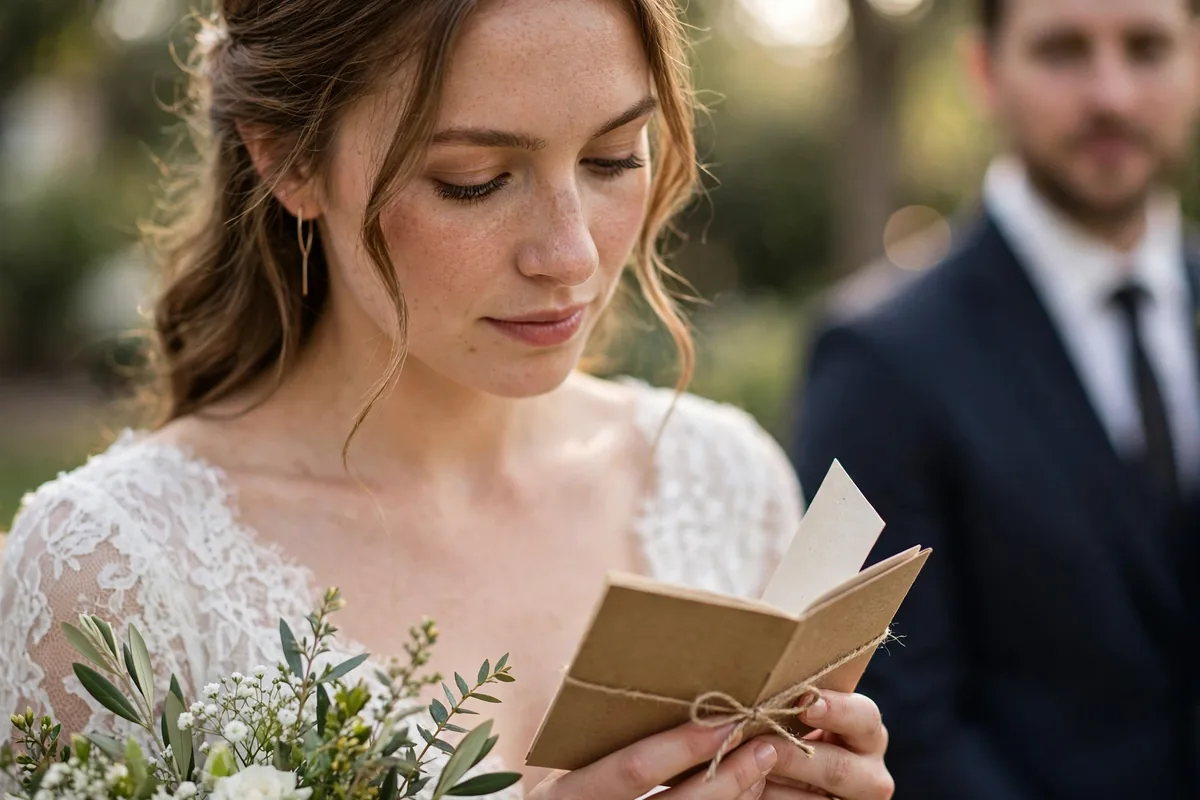
Personal wedding vows are generally around 150 to 250 words, which usually takes about one to two minutes to deliver at a comfortable speaking pace.
| Vow Length | Approximate Speaking Time |
|---|---|
| 100 words | 40 to 50 seconds |
| 150 words | 1 minute |
| 200 words | 1 to 1.5 minutes |
| 250 words | 1.5 to 2 minutes |
| 300 words | Around 2 minutes |
Agree on an approximate length with your partner before the ceremony. Your vows do not need to have identical wording, but similar speaking times help keep the exchange balanced.
What to Avoid When Writing Wedding Vows
A few common mistakes can make personal vows less meaningful or harder to deliver.
- Writing too much: Your vows are not a complete relationship history or a wedding speech. Focus on the most important memories and promises.
- Using words that do not sound like you: You do not need complicated vocabulary or dramatic expressions. Write the way you naturally speak.
- Making promises that are too vague: Instead of saying “I promise to be a good partner,” explain what that means to you, such as listening, supporting, and communicating honestly.
- Including embarrassing private stories: Avoid intimate details, personal disagreements, or jokes that could make your partner uncomfortable in front of guests.
- Making every line humorous: A little humour can make your vows feel relaxed, but remember that the central purpose is to express love and commitment.
- Copying examples word for word: Examples can help you get started, but your final vows should reflect your own experiences and feelings.
- Forgetting the actual promises: Compliments and memories are lovely, but vows should include clear commitments about your shared future.
How to Deliver Your Wedding Vows Confidently
Even well-written vows can feel difficult to deliver when you are standing in front of family and friends. A little preparation can help you feel more comfortable.
Practise Reading Them Aloud
Read your vows several times before the wedding. Speaking them aloud helps you identify sentences that sound awkward, too long, or difficult to say naturally.
Speak Slowly and Clearly
It is normal to feel emotional or nervous during the ceremony. Take your time, pause between important sentences, and speak clearly enough for your guests to hear.
Keep a Written Copy
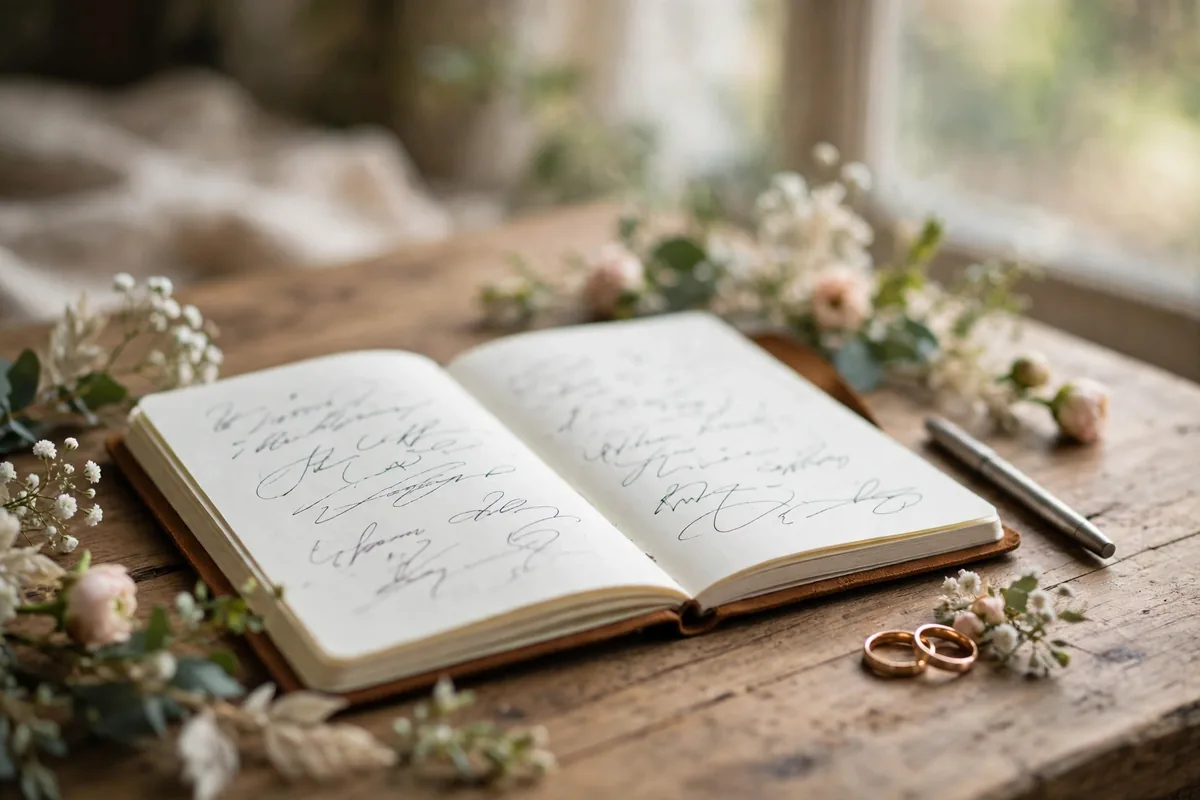
You do not have to memorise your vows. Write them in a small notebook or vow booklet so you can read them comfortably during the ceremony.
Make Eye Contact With Your Partner
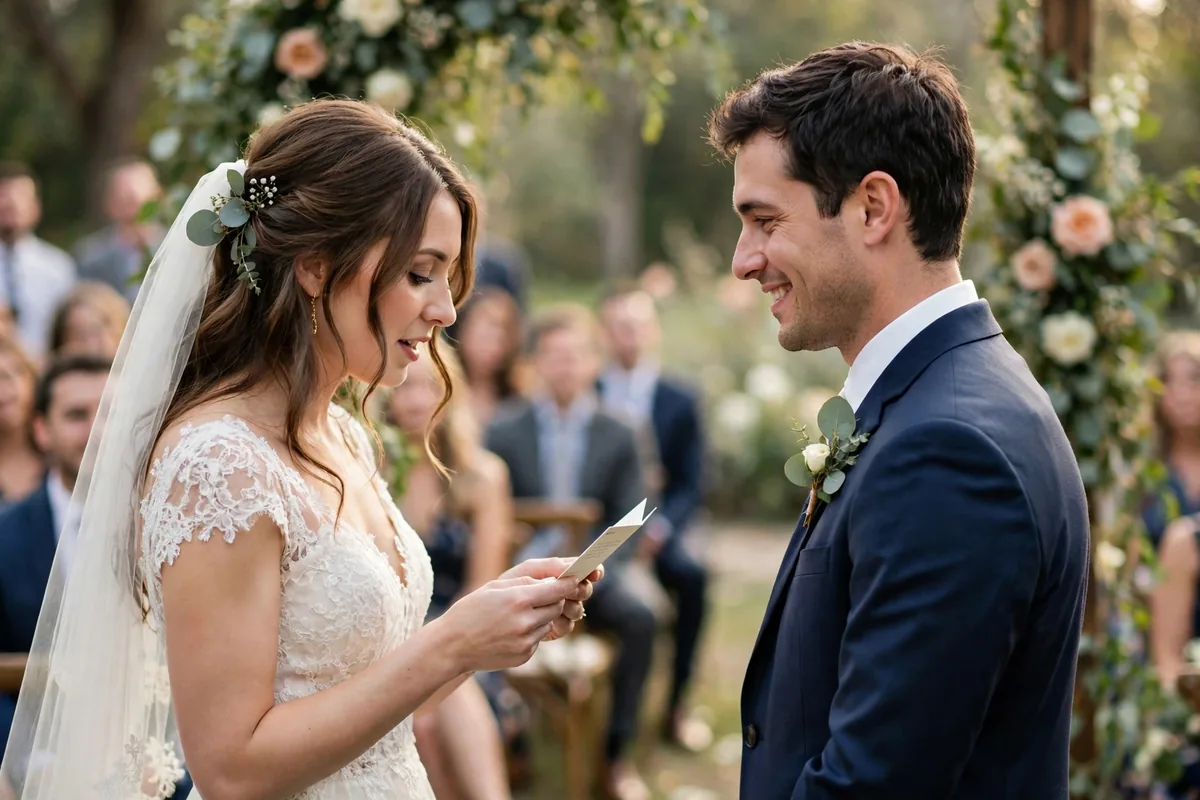
Try to look at your partner while delivering the most meaningful parts. You can glance at your notes when needed, but occasional eye contact helps make the moment feel personal.
Prepare for Emotion
You might laugh, become tearful, or need a moment to collect yourself. That is completely normal. Take a breath and continue when you feel ready.
Should You Write Your Own Wedding Vows or Use Traditional Ones?
Both options can make a wedding ceremony meaningful. The right choice depends on your preferences, beliefs, and ceremony requirements.
| Personal Wedding Vows | Traditional Wedding Vows |
|---|---|
| Written in your own words | Use established wording |
| Include personal memories and promises | Focus on recognised marriage commitments |
| Can be romantic, funny, or emotional | Usually follow a formal structure |
| Allow more individual expression | May be required in some ceremonies |
Some couples combine both approaches by exchanging traditional vows during the ceremony and adding personal promises afterward. Remember that legal and religious ceremony rules vary by location and type of service. Check with your officiant or celebrant before finalising your wording.
When Should You Start Writing Your Wedding Vows?
Try to begin brainstorming several weeks or even a few months before your wedding. This gives you time to reflect, write a first draft, make changes, and practise without rushing. A simple schedule could look like this:
- Four to six weeks before: Collect memories, ideas, and promises.
- Two to three weeks before: Write your first complete draft.
- One week before: Edit the wording and agree on the final length.
- A few days before: Practise reading your vows aloud.
- Wedding day: Bring a clean, easy-to-read copy.
Final Thoughts
Writing wedding vows becomes easier when you stop trying to find perfect romantic words and focus on what you genuinely want to say. Think about your relationship, share a meaningful memory, explain what you admire about your partner, and make a few promises you intend to keep. Keep your vows personal, honest, and comfortable to read aloud. Whether they are romantic, funny, emotional, or simple, the most important thing is that they reflect the commitment you are making to each other.