How to Get Rid of a Piercing Bump: Safe Treatment Tips
A piercing bump may go away with gentle aftercare, but the right treatment depends on what is causing it. Irritation, trapped fluid, an allergic reaction, infection, and raised scar tissue can all create a bump around a piercing. Start by keeping the area clean, avoiding pressure and friction, and leaving the jewellery alone. Do not squeeze the bump or apply harsh products. If it is painful, hot, increasingly swollen, or producing pus, seek medical advice rather than treating it as a simple irritation bump.
What Is a Piercing Bump?
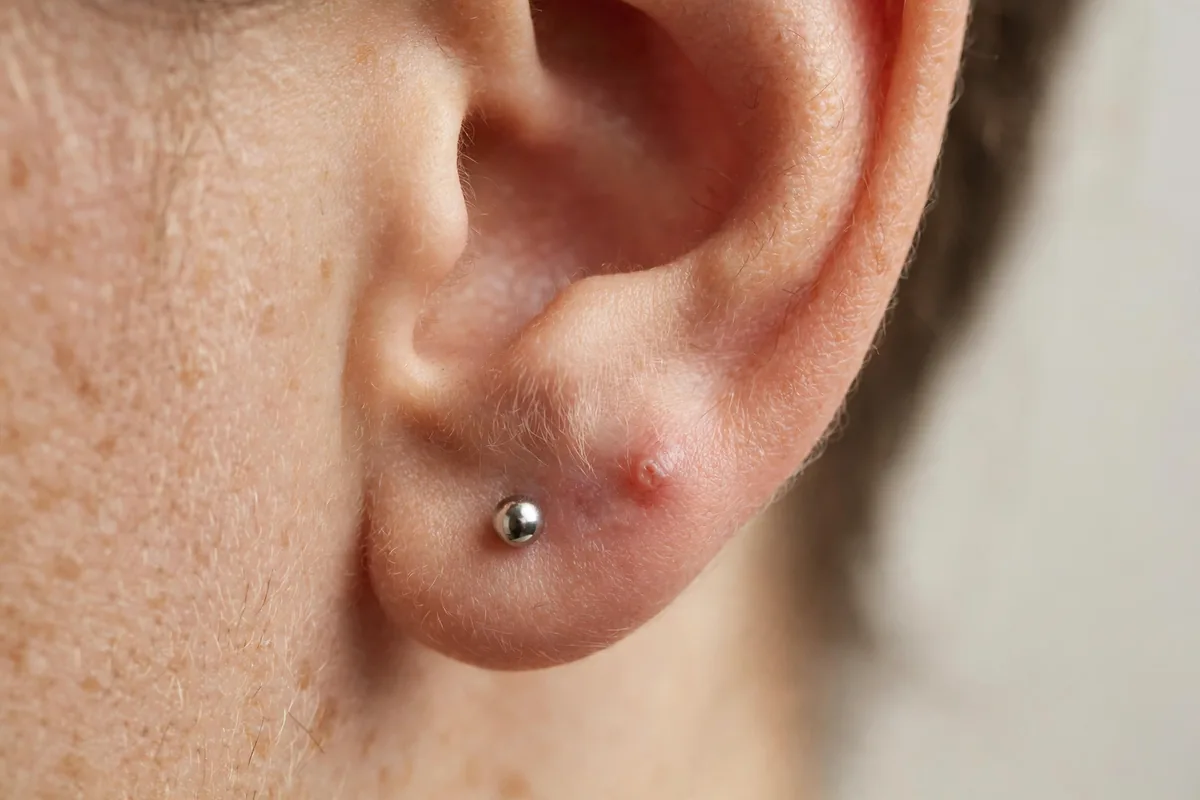
A piercing bump is a small raised area of skin that develops around or beside a piercing hole. It may look like a pimple, a fluid-filled lump, or a firm raised spot. Some bumps are temporary and settle as the piercing heals. Others need professional treatment. A bump does not automatically mean you have a keloid or an infection. Its appearance, symptoms, growth, and timing can help indicate what might be happening, but a healthcare professional is best placed to diagnose it.
What Causes a Piercing Bump?
Several issues can cause a bump to form around a piercing.
Irritation
Irritation is a common reason for a small bump. It can develop when the piercing is repeatedly knocked, pulled, twisted, or exposed to pressure. Common triggers include:
- Sleeping on a new ear piercing
- Catching jewellery on clothing or towels
- Frequently touching or twisting the jewellery
- Wearing headphones or helmets that press against the area
- Changing jewellery before the piercing has healed
- Using strong cleaning products
Reducing friction and unnecessary movement may help an irritation-related bump settle.
Allergic Reaction to Jewellery
Some people react to metals used in piercing jewellery, particularly nickel. An allergic reaction may cause itching, redness, a rash, swelling, or irritated skin around the piercing. If you suspect a metal allergy, ask a qualified piercer or healthcare professional to assess the jewellery. Implant-grade titanium is often considered a suitable option for people with metal sensitivities. Do not change jewellery yourself if the piercing is new, swollen, or possibly infected.
Infection
An infected piercing may develop a swollen lump or a pimple-like bump. Other symptoms can include increasing pain, warmth, redness or darkening of the surrounding skin, and discharge that may be yellow, green, or white. Fever, chills, or feeling generally unwell can indicate that the infection needs urgent medical attention. Do not try to pop or drain the bump.
Granuloma or Fluid-Filled Bump
A granuloma is a small lump that can form around some piercings, including cartilage and nose piercings. It may be associated with trapped fluid or ongoing irritation. The NHS notes that small lumps can sometimes develop around ear or nose cartilage piercings. A clean pad soaked in warm water and held gently against the lump once a day may help in some cases. If the lump persists, grows, or becomes painful, get it checked.
Hypertrophic Scar or Keloid
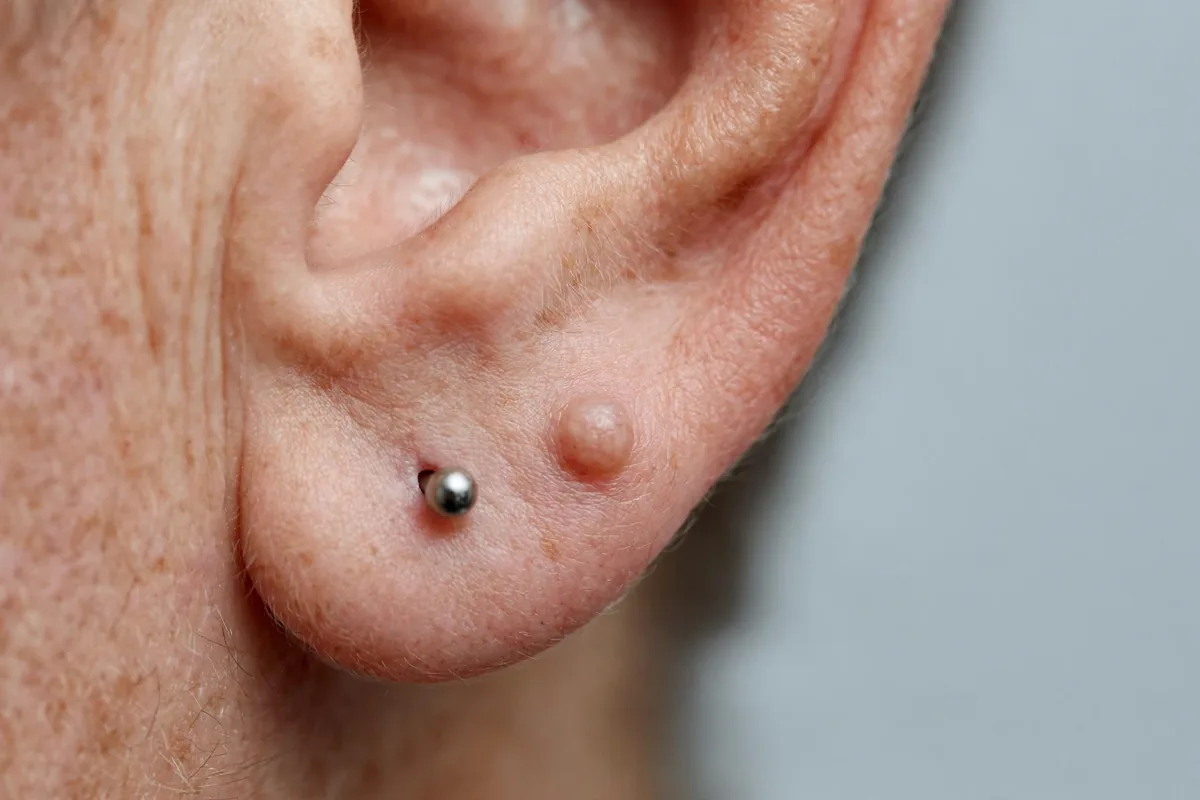
A hypertrophic scar is raised scar tissue that stays within the boundaries of the original injury. It may become less noticeable over time. A keloid is different: it grows beyond the original piercing wound and may continue enlarging. It can feel firm, smooth, itchy, or uncomfortable. Keloids do not usually disappear without treatment and should be assessed by a dermatologist.
How to Get Rid of a Piercing Bump Safely
The safest approach is to identify the likely cause and avoid anything that could make the area more irritated.
Clean the Piercing Gently
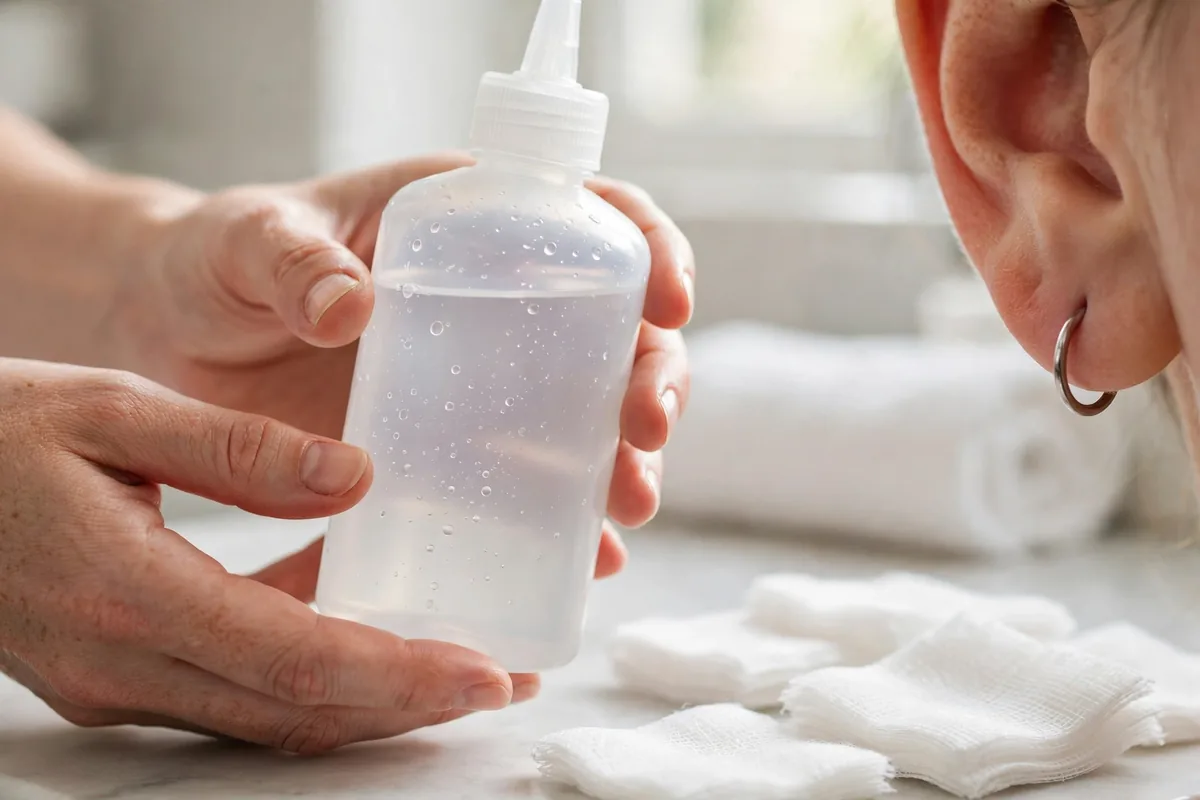
Wash your hands before touching the area. Clean the piercing gently with sterile saline wound wash or mild, fragrance-free cleanser and clean water. Follow the product instructions and rinse away any cleanser residue. Avoid scrubbing the bump or moving the jewellery around while cleaning. Pat the surrounding skin dry with clean disposable gauze or paper towel. Cleaning too aggressively can irritate healing skin, so keep your routine gentle and consistent.
Use Sterile Saline Instead of Harsh Products
A sterile saline wound wash containing 0.9% sodium chloride can help remove surface debris without exposing the piercing to unnecessary ingredients. Avoid using:
- Rubbing alcohol
- Hydrogen peroxide
- Strong antiseptic solutions unless prescribed
- Scented soaps and skincare products
- Undiluted essential oils
- Homemade mixtures that are too salty
These products may irritate or dry the surrounding skin. Tea tree oil is also not a proven treatment for piercing bumps and can cause irritation or allergic reactions.
Stop Touching, Twisting, or Squeezing the Bump
Repeatedly touching a piercing transfers germs and can keep the area inflamed. Twisting or rotating the jewellery may also disturb healing tissue. Do not squeeze the bump, pop it like a pimple, pierce it with a needle, or try to drain it. These actions can worsen inflammation, cause bleeding, introduce bacteria, and increase the risk of scarring. Clean the area gently and leave it alone between cleaning sessions.
Reduce Pressure and Friction
Think about what might be rubbing or pressing against the piercing. Small changes can make a difference:
- Avoid sleeping directly on the affected ear.
- Keep headphones, helmets, and tight clothing away from the piercing when possible.
- Be careful when brushing your hair or changing clothes.
- Avoid unnecessary jewellery movement.
- Keep hair products and makeup away from the healing area.
If the jewellery feels too tight, is pressing into the skin, or appears to be sinking into the piercing, get it assessed promptly by a healthcare professional or an experienced piercer.
Check Whether the Jewellery Is Suitable
Jewellery that is too tight, too heavy, poorly fitted, or made from a metal you react to can contribute to irritation. A reputable professional piercer can assess the jewellery’s fit and material and advise whether a change is appropriate. Implant-grade titanium may be an option if metal sensitivity is suspected. Do not remove or replace jewellery yourself when the piercing is swollen or potentially infected. If infection is suspected, leave the jewellery in unless a doctor tells you to remove it.
Get Medical Treatment for Infection or Scarring
Home care cannot treat every type of piercing bump. An infection may require medical treatment, including antibiotics when appropriate. A suspected keloid may need a dermatologist’s assessment and treatments such as corticosteroid injections, silicone products, or other scar treatments. Do not use leftover antibiotics or prescription creams without medical advice. The treatment depends on the diagnosis.
Piercing Bump vs. Keloid: How to Tell the Difference
These conditions can look similar, but they are not the same.
| Feature | Irritation bump | Keloid |
|---|---|---|
| Appearance | Often small and close to the piercing | Firm, raised scar that may extend beyond the piercing |
| Common cause | Friction, pressure, movement, or irritation | Excess scar tissue after skin injury |
| Growth | May settle when irritation is reduced | Can continue growing over time |
| Symptoms | May be tender or inflamed | May itch, feel uncomfortable, or become painful |
| Treatment | Correcting the source of irritation and gentle care | Dermatologist-led scar treatment |
A bump that keeps growing beyond the original piercing wound should be assessed by a dermatologist. Do not assume that every raised lump is a keloid.
How to Get Rid of a Nose Piercing Bump
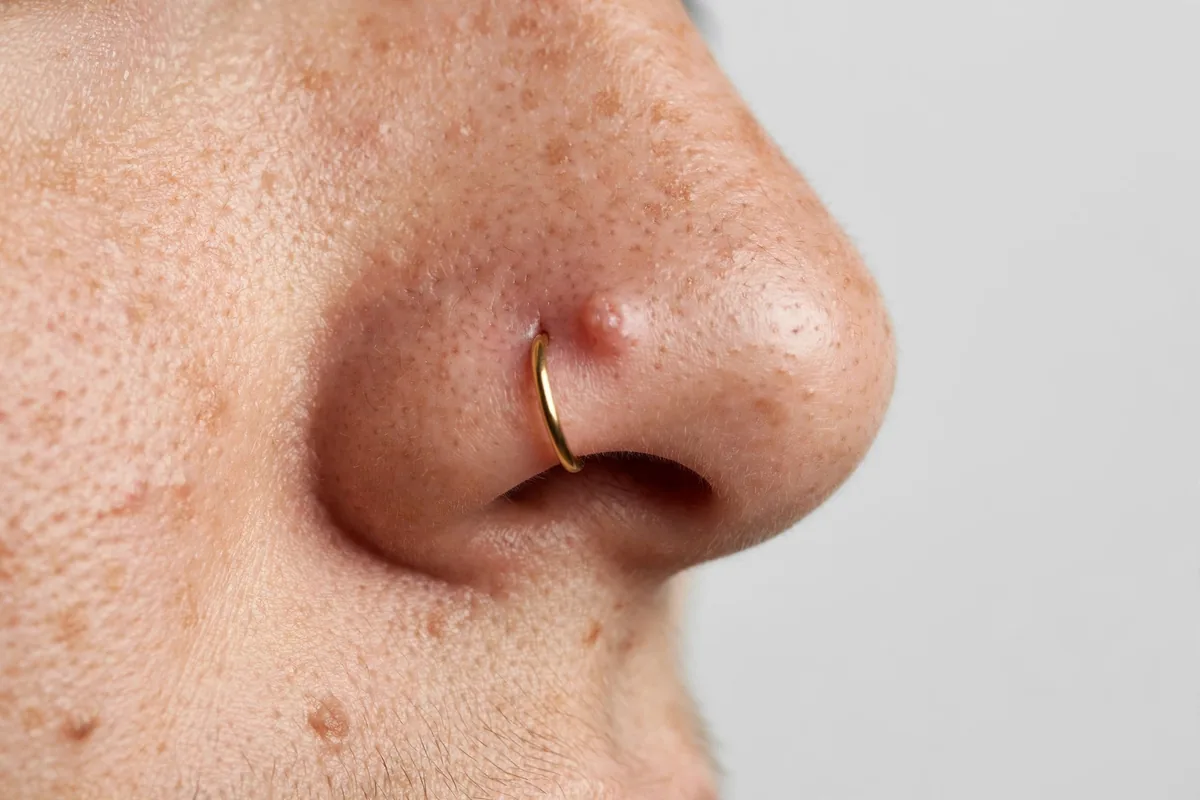
Nose piercing bumps can develop because of irritation, jewellery problems, infection, or scar tissue. The first step is to avoid pressure and unnecessary movement. Clean the area gently with sterile saline wound wash, keep makeup and skincare products away from the piercing, and avoid squeezing the bump. Be careful when drying your face, blowing your nose, or changing clothes so the jewellery does not catch. If the bump becomes increasingly painful, hot, swollen, or starts producing pus, seek medical advice. A persistent or enlarging lump also needs assessment to rule out a scar condition or another problem.
How to Get Rid of an Ear Piercing Bump
Ear piercing bumps may form on the earlobe or cartilage. Pressure from sleeping, headphones, helmets, and jewellery can contribute to irritation. Avoid sleeping on the affected ear and keep objects that press against it to a minimum. Clean the piercing gently and do not twist the jewellery. Cartilage piercings deserve particular attention. Increasing pain, warmth, swelling, or discharge around an upper-ear cartilage piercing should be assessed promptly because cartilage infections can become serious. If a firm lump continues to grow or extends beyond the original piercing, ask a dermatologist whether it could be a keloid.
How Long Does a Piercing Bump Take to Go Away?
Healing time depends on what is causing the bump. There is no single timeline that applies to every case. An irritation bump caused by friction, pressure, or movement may start to improve within 1 to 2 weeks once the source of irritation is removed. Fully settled skin can take 4 to 8 weeks depending on how long the irritation was present and how well aftercare is maintained. A fluid-filled lump or granuloma can take longer, sometimes 2 to 3 months, particularly on cartilage piercings which heal more slowly than earlobe piercings. An infected bump will not follow a predictable timeline with home care alone. If antibiotics are prescribed, some improvement may be visible within a few days, but the full course must be completed. A keloid is unlikely to improve on its own. Without treatment it may continue to grow. Dermatologist-led treatments such as corticosteroid injections may reduce it over several sessions, but results vary. General expectations at a glance:
| Bump Type | Approximate Timeline |
|---|---|
| Irritation bump | 1 to 8 weeks with reduced friction |
| Granuloma or fluid lump | 2 to 3 months |
| Infection | Needs medical treatment |
| Keloid | Does not resolve without treatment |
If a bump is not improving after 4 to 6 weeks of consistent gentle aftercare, arrange an appointment rather than continuing to try new remedies at home.
What Not to Put on a Piercing Bump
Some popular home remedies can make a piercing bump worse. Avoid applying:
- Tea tree oil: It can irritate the skin and trigger an allergic reaction.
- Toothpaste: It is not designed to treat piercing wounds and may cause irritation.
- Crushed aspirin: Applying it to the skin can cause irritation or a chemical burn.
- Rubbing alcohol: It can dry and irritate healing tissue.
- Hydrogen peroxide: It can damage or irritate the skin around a healing piercing.
- Heavy skincare products: Fragrances and other ingredients may irritate the area or collect around the piercing.
Do not use acne treatments, exfoliating acids, or strong spot treatments directly on the piercing unless a healthcare professional advises you to.
When Should You See a Doctor?
Get medical advice promptly if you notice signs of infection, including:
- Increasing pain, swelling, or warmth
- Skin that becomes very red or darker than usual
- Yellow, green, or white pus
- Bleeding that does not settle
- Fever, chills, or feeling unwell
Seek urgent care if symptoms are severe or spreading. An upper-ear cartilage piercing with worsening pain, swelling, or discharge also needs prompt assessment. Arrange a dermatologist appointment if the bump is firm, keeps growing, extends beyond the original wound, or does not improve with gentle aftercare. These features may indicate a keloid or another condition that needs specific treatment.
How to Prevent Piercing Bumps in the Future
Good aftercare can reduce irritation and lower the risk of complications:
- Choose an experienced professional piercer who uses sterile equipment.
- Follow the aftercare instructions for your specific piercing.
- Wash your hands before touching the area.
- Clean gently and avoid over-cleaning.
- Do not twist, pull, or play with the jewellery.
- Avoid pressure from sleeping positions, headphones, and clothing.
- Use suitable, well-fitted jewellery made from a material you tolerate.
- Avoid changing jewellery before the piercing has healed.
- If you have developed keloids before, discuss your risk with a dermatologist before getting another piercing.
Final Thoughts
A piercing bump may be caused by irritation, an allergic reaction, infection, trapped fluid, or raised scar tissue. Gentle cleaning, reducing pressure, and avoiding unnecessary jewellery movement can help with minor irritation, but not every bump can be treated at home. Do not squeeze the lump or apply harsh remedies. If it is painful, hot, increasingly swollen, producing pus, or continuing to grow, seek medical advice. Identifying the cause is the best way to choose a treatment that is safe and effective.
Frequently Asked Questions
Can a piercing bump go away on its own?
Some irritation-related bumps improve when pressure and friction are removed. Keloids usually do not disappear without treatment.
Should I pop a piercing bump?
No. Popping or squeezing it can damage the tissue, introduce bacteria, and worsen inflammation.
Does salt water help piercing bumps?
Sterile saline wound wash may gently clean the area. Avoid overly salty homemade mixtures, which can irritate healing skin.
Is a piercing bump always a keloid?
No. It may be an irritation bump, fluid-filled lump, infection, allergic reaction, or raised scar. A professional can help identify the cause.
Should I remove my jewellery if I have a piercing bump?
Do not remove it yourself if infection is possible. Leave it in unless a doctor advises otherwise.
When should I worry about a piercing bump?
Seek medical advice if it becomes increasingly painful, hot, swollen, produces pus, or is accompanied by fever or chills.